
Traditional Nablusi Soap Making
Before a bar of soap touches your skin, its story is already 1300 years in the making. Long before modern bars were produced, wrapped and sold, it was discovered in the Levant that oil, water, and alkali could be transformed into something cleansing and essential.
What’s remarkable is that no matter if your soap is French-milled luxury, from your grandmother’s kitchen, or an artisan studio like my own, its origins ultimately trace back to that early Levantine craft. Nablus, located in the West Bank, became one of the great centres of this tradition, and this alchemical knowledge became the foundation of every bar of soap we know today.
Step inside one of the remaining soap factories in the Old City of Nablus and the first thing you’ll notice is the warmth. The air carries the gentle scent of olive oil heating in a vat in the ground, rising with steam and the faint mineral note of lye dissolving into water. This simple chemistry has been unfolding here for centuries.
In earlier generations, teams of men stirred the mixture by hand for days, guiding long wooden paddles through the thickening mass. Today, some workshops use partial mechanisation to ease the heaviest labour, but the craft remains unmistakably human, where timing, intuition, and inherited knowledge all converge.
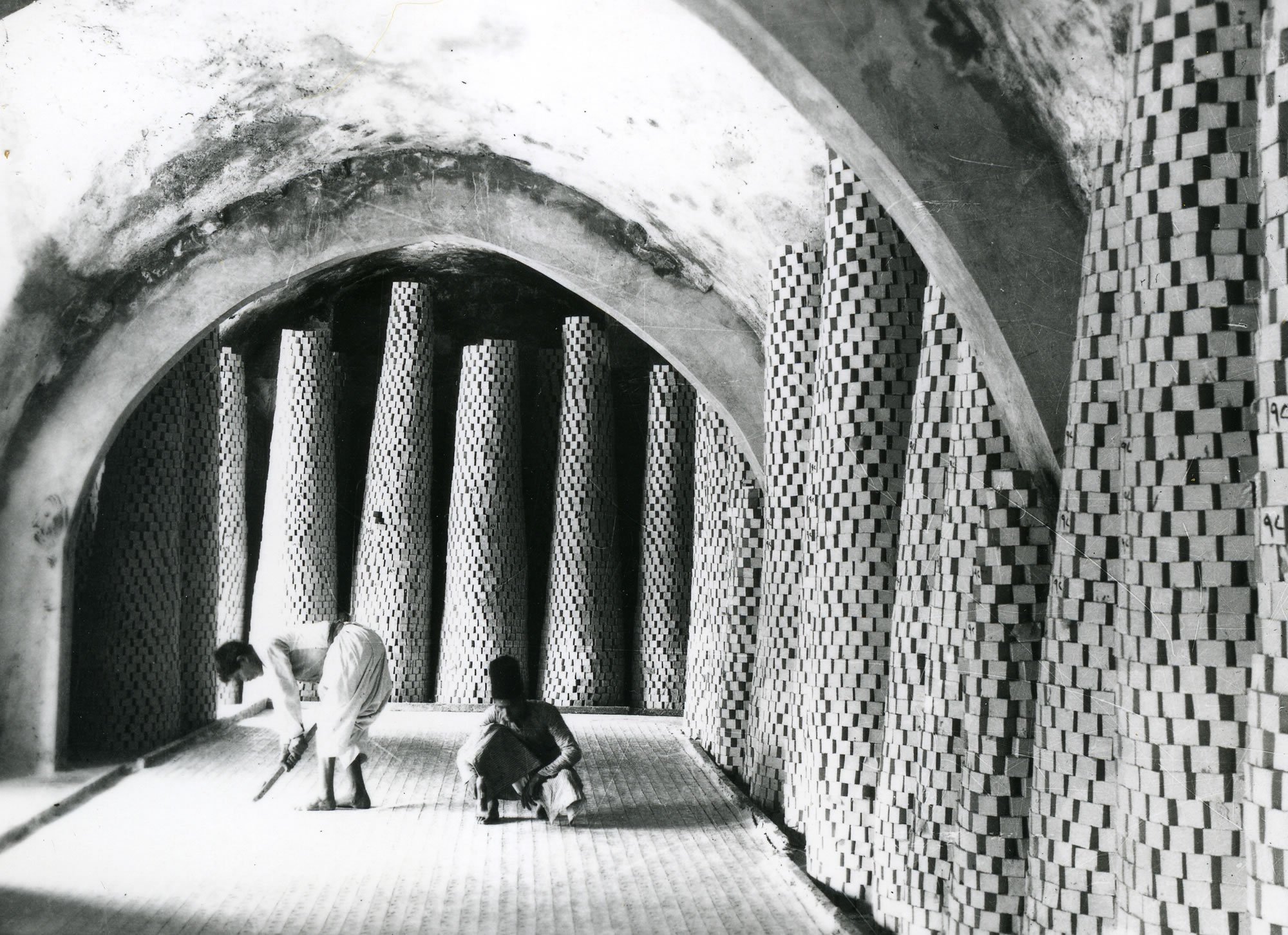
When the soap reaches the right consistency, it’s poured across the wide stone floor. Workers step lightly onto the warm surface, pulling long wooden rulers through the soft slab to score it into perfect cubes. Each piece is then stamped with the maker’s emblem, a small but proud continuation of a family’s legacy.
Then comes the most striking sight of all, the drying towers. Fresh bars are stacked into tall, airy structures that allow air to circulate around every bar as it cures. The soap dries slowly for months as rooms fill with these pale olive cubes, their earthy scent subtle yet distinct, waiting to be wrapped and carried into homes across the world,
At its height, Nablus was home to dozens of soap factories, exporting across the Middle East and beyond. Today, only a handful remain, challenged by occupation, economic restriction, and competition from modern mass-produced detergents. Yet the tradition endures. In 2024, UNESCO recognised Nablusi soap-making as an element of Intangible Cultural Heritage, acknowledging both its deep cultural value and the fragility of its survival.
So, to hold a bar of soap is to hold a story and to hold truth. A history kept alive by generations who remember the footsteps of their elders: the soap alchemy within arched stone walls, the camels who delivered the olive oil from the groves, the olive trees planted by the ancestors and still harvested by their descendants. When a bar of soap ends up in your hands, it carries this lineage, beginning in the Levant and carried across continents and centuries.
_____
Our fundraiser for the Palestinian Children Relief Fund is for an incredibly urgent cause. Featuring genuine Palestinian soap in the traditional method, it will be held in conjunction with our Limited Christmas Event. Only 3 more sleeps away, join us at www.lessence.com.au from Monday at 7.30pm (AEST) for 48 hours only.